"Is that like a courtroom artist?"
When I tell people I'm a graphic recorder, that's the reply I hear most. The picture that comes to mind is someone at the edge of a room, sketching faces and gestures as they happen.
It’s a good guess because that’s the main exposure folks have to live drawing. But as opposed to drawing who is in the room, graphic recorders draw the ideas that are happening in the room.
So what is graphic recording?
Graphic recording is the practice of turning a live conversation into a visual map, in real time. While a group talks, I listen and sketch the ideas, connections and themes as they take shape, using words, drawings and metaphors.
You'll sometimes hear it called live scribing, visual notetaking or sketch noting. The tools vary. Sometimes it's markers on a long sheet of paper on a (portable) wall. Sometimes it's an iPad, projected onto a screen. Either way, people are always encouraged to come up and share their ideas and thoughts on the graphic. They can do this by speaking directly with me or by writing their ideas on post-its and applying those directly to the board.
By the end, the group has one image that holds the whole conversation: what came up, how it connected, and where people landed.
Synthesis, not transcription
This is the heart of it. I'm not writing down what people say. I'm drawing what the group is thinking.
A transcript captures every word and that's useful for some things, but nobody wants to reread two hours of meeting. A graphic recording listens for the patterns underneath the words:
The themes that keep coming back, even when people phrase them differently
The connections between an idea raised at 9 a.m. and one that surfaces after lunch
The tensions where the group pulls in two or more directions
The energy in the room, the moments where people lean in
Say three people at a community session each describe a different frustration: the bus doesn't come often enough, the clinic is across town, the evening programs end too late. A transcript lists three complaints. A graphic recording might show one idea: access depends on getting there.
That's also why it works so well for collective work. No single voice dominates the page. The visual belongs to the whole room.
What graphic recording isn't
It isn't courtroom drawing. Courtroom sketch artists capture people: faces, expressions, who sat where. I rarely draw a recognizable person at all. The subject is the ideas.
It isn't minutes in pictures. Meeting minutes record who said what and what was decided. A graphic recording shows how the thinking fit together. It works alongside your notes; it doesn't replace them.
It isn't decoration. It can be beautiful, but it's there to help people think, remember and act, not just to brighten up the back wall.
It isn't about artistic talent in the room. Nobody else has to draw. Your participants just have the conversation they came to have.
It isn't a fine-art illustration made after the fact. It happens live, in front of the group, which is part of the point. People see their ideas land on the page as they speak.
Why groups use it
People feel heard. When participants see their idea show up on the wall, they know it counted. That matters in community engagement, strategy sessions, and anywhere trust is still being built.
The room stays on the same page, literally. A shared map helps groups notice where they agree, where they don't, and what's still missing, while there's still time to talk about it.
It's easier to remember. People recall images far more readily than slide decks or reports. Months later, the map still brings the conversation back.
It travels. After the event, the recording becomes a summary you can share with people who weren't there: staff, funders, boards, the wider community. It's often the one thing from a long day that people actually look at again.
I see it used at conferences, board retreats, community consultations, strategic planning, and gatherings where many voices need to be held at once.
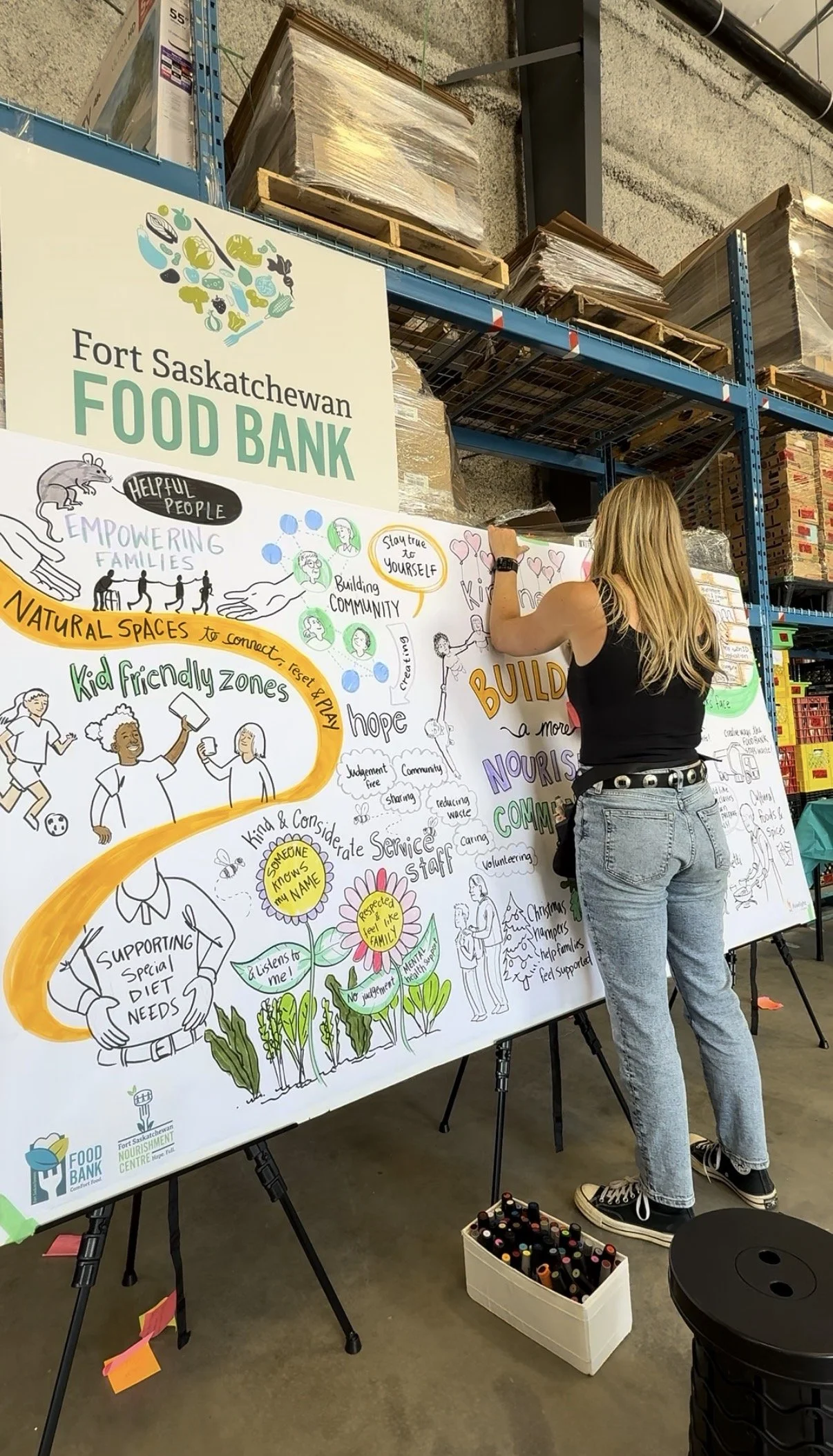
Graphic recording on paper for the Fort Saskatchewan food bank.
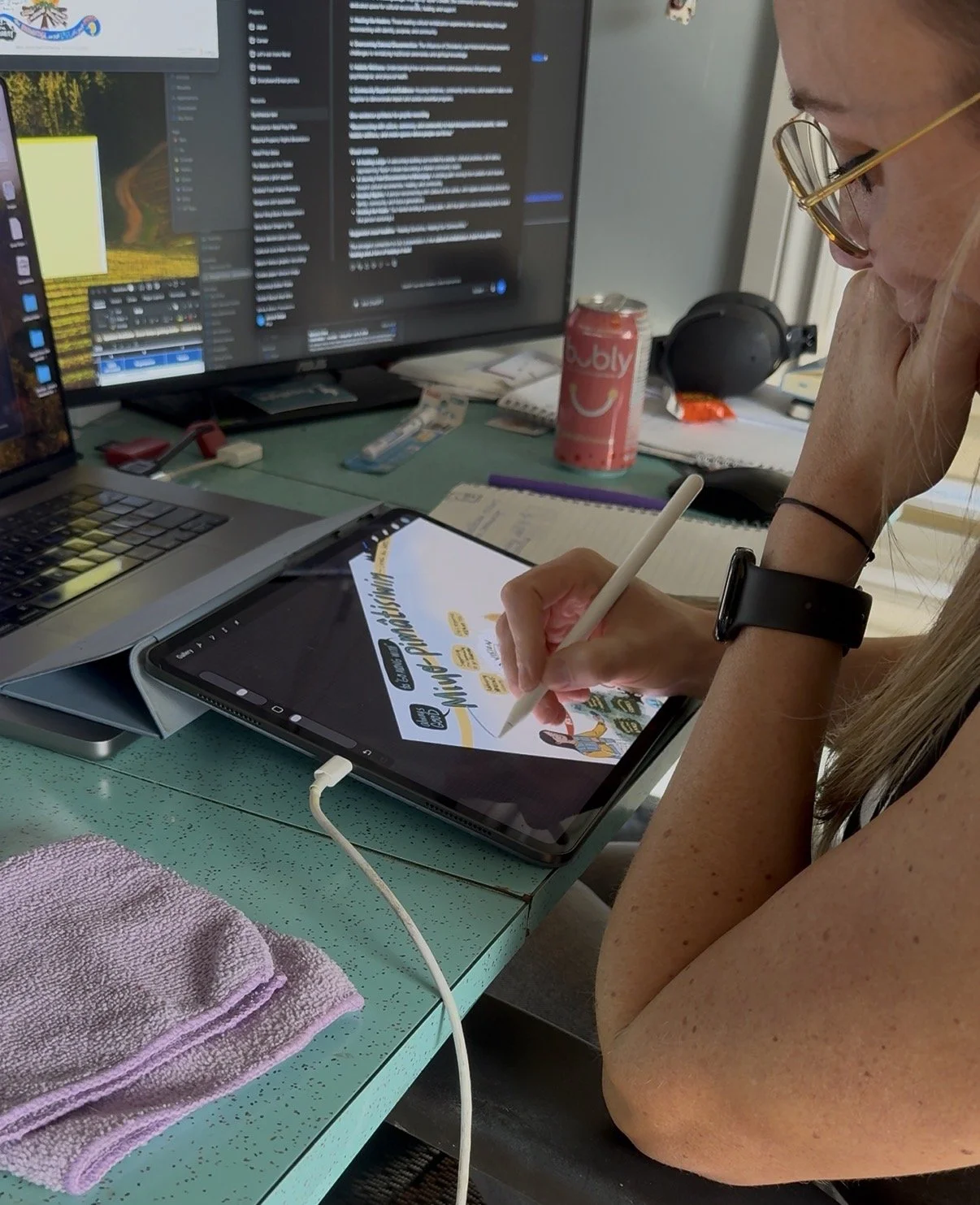
A virtual graphic recording.
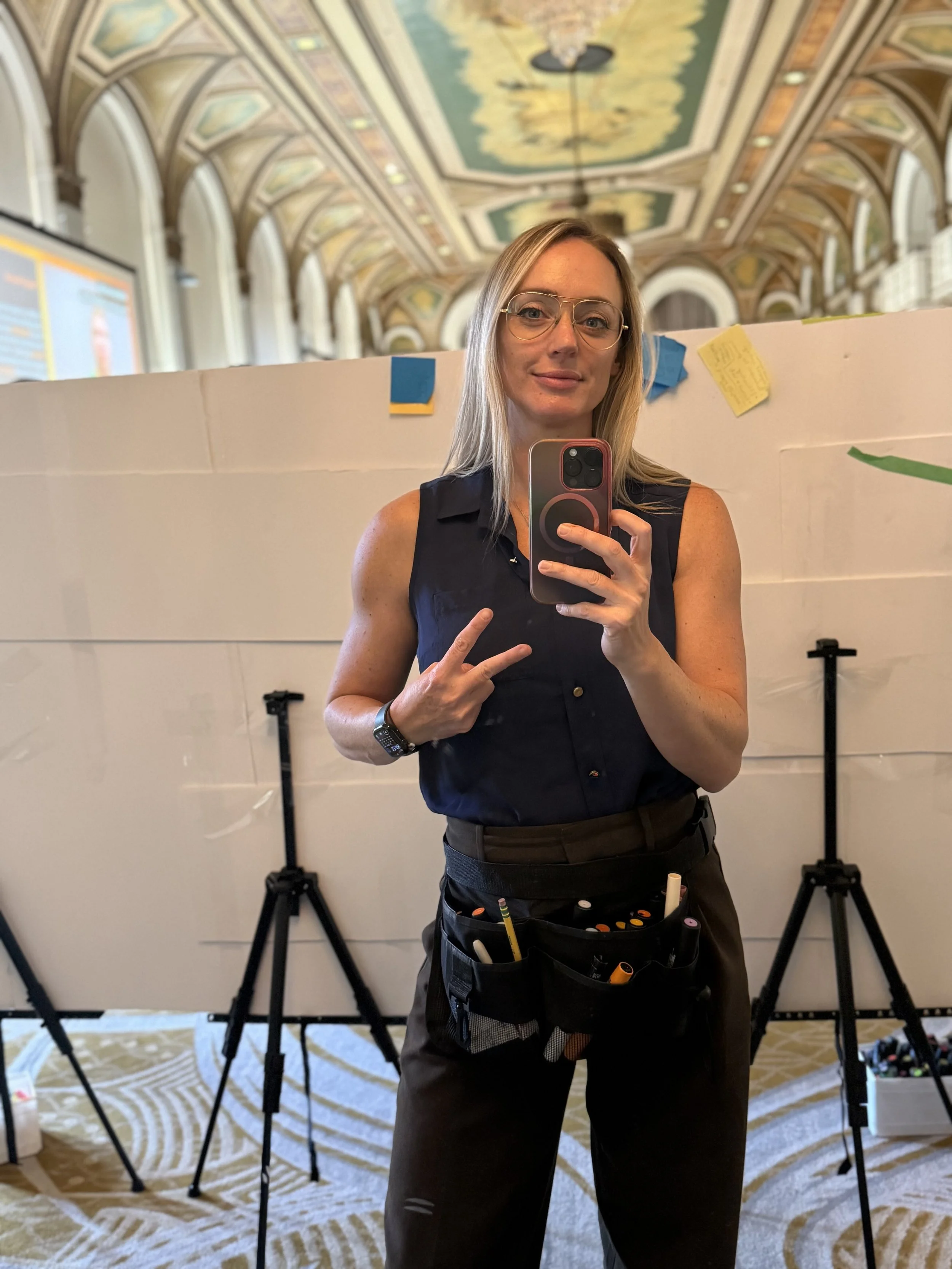
Graphic recording can be utilized with small groups of 5-10 as well as huge gatherings of hundreds of people.